Healthcare Storys
Millions of people with chronic respiratory diseases such as asthma and COPD are among the most vulnerable to the corona pandemic. The best protection is offered by an optimally adjusted therapy of the inflamed lung areas - and this could receive an innovative boost through Nasal Long-Term Inhalation therapy (NLI
Artikel lesen

A good idea is the first step in setting up a business. But it is only one aspect that leads to corporate success. In an interview, Jens Fuerbeth from Volksbank Mittelhessen explains what makes good financial advice for healthcare start-ups.
Artikel lesen

Insect research is a Giessen success story: Experts expect innovative solutions for global challenges. The State of Hessen is now providing further funding for the region’s scientific efforts.
Artikel lesen

The new MacTRAP mouse line allows researchers to closely study ‘hidden’ renal macrophages. These results open up new possibilities for the diagnosis of inflammatory diseases.
Artikel lesen
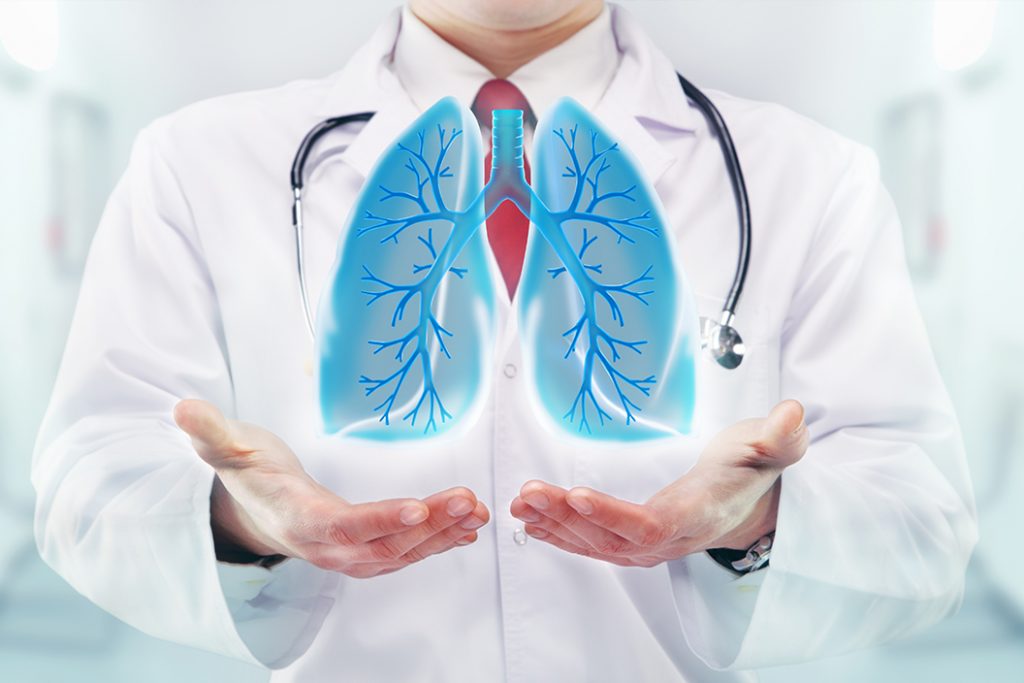
Die Deutsche Forschungsgemeinschaft (DFG) unterstützt mit 13,84 Millionen Euro ein Forschungskonsortium aus Mittelhessen, das nach neuen Strategien zur Behandlung von tödlichen und bislang unheilbaren Lungenhochdruck sucht.
Artikel lesen

Good medicine needs secure financing: The medService of Volksbank Mittelhessen offers doctors, pharmacies and clinics tailor-made financing for investments, devices and office equipment.
Artikel lesen

EXCITING STORY? INNOVATIVE SERVICE?

We bring your content to the blog.
Please contact us. 

Follow us…

facebook - Healthcare Mittelhessen   LinkedIn - Healthcare Mittelhessen   LinkedIn - Healthcare Mittelhessen

Nasal Long-Term Inhalation Therapy: Treating the respiratory tract during sleep

Millions of people with chronic respiratory diseases such as asthma and COPD are among the most vulnerable to the corona pandemic. The best protection is offered by an optimally adjusted therapy of the inflamed lung areas – and this could receive an innovative boost through Nasal Long-Term Inhalation therapy (NLI therapy), which is currently being developed in Marburg.

Nasale Langzeit-Inhalation bei Asthma und COPD

First you might only feel a slight pull in the chest, but then tightness spread. Your breathing accelerates. Your heart beats faster. You begin to panic because of what’s happening, but the panic only makes the pain worse. Those who have known the threatening feelings that come with shortness of breath never want to experience them again, of course. But for many patients with chronic lung diseases, this is daily reality: They live with the fear of not getting air from one moment to the next.

The number of sufferers is significant: For example, common lung diseases such as asthma and COPD affect an estimated 15 million people in Germany alone. And their concerns are now increased for new reasons: These patients belong to the corona risk group, and they would experience an extremely serious medical condition in the event of coronavirus infection.

The Limits of Conventional Inhalation Therapy

In advanced disease stage, chronic respiratory patients require certain medicines. Their active ingredients – usually inhaled – lead to, among other things, a widening of the bronchi, which quickly provides air in an emergency and prevents further attacks of respiratory distress over the long term. The inhalation of these ingredients is intended to guarantee that the active substance being used reaches its destination quickly: the smallest branches of the lungs, in which respiratory diseases happen.

people suffer from asthma or COPD in Germany
0

In reality, however, there are a number of hurdles in the way of this goal: the use of small inhalation systems (dosing aerosols), with which patients usually inhale the active substance two to three times a day, is extremely prone to errors. Complicating matters is the long distance that these tiny active particles have to travel from the mouth to the small lung branches. “What patients inhale of the drug and what ultimately arrives in the lungs is comparatively too little,” says Prof. Dr. Ulrich Koehler from the Department of Internal Medicine, Pulmonary Medicine and Sleep Medicine in Marburg. Also, if patients take several medications every day, they are bound to lose track or they forget to take them on symptom-free days.

All in all, inhalation therapy therefore places considerable demands not only on coordination abilities, but also on the continuous cooperation of the patients. The result can be a fluctuating dosage of the active substance, which can significantly jeopardize the success of the treatment.

The possibilities of nasal long-term inhalation

So how can inhalation therapy be optimized for the benefit of patients? In the search for opportunities for improvement, a group of researchers from the University of Marburg (Prof. U. Koehler), the Technical University of Middle Hessen (Prof. V. Gross and Prof. K. Sohrabi) and Thora Tech GmbH (Dr. Weissflog) have found a surprising answer: Following the current concept of Nasal Long-Term Inhalation (NLI), patients should continue to inhale via the nose in the future – and they should also do so in their sleep: “It’s about taking advantage of the night phase”, says Prof. Koehler.

Leiter des schlafmedizinischen Zentrums in Marburg

According to the researchers’ theory, the sleep phase of patients offers the best conditions for the success of inhalation therapy. There are several reasons for this: On the one hand, there is sufficient time at night to administer – according to the principle of “long-time/low-dose” – using small amounts medication over a longer period of time. This method could help reduce side effects and also relieve patients who need to inhale their medications several times during the day. On the other hand, symptoms are often particularly pronounced at night and in the early morning, when the airways become narrow and mucus has accumulated more in the lungs. Against this background, it is possible to directly counteract this discomfort by taking the medication at night.

How nighttime inhalation works through the nose

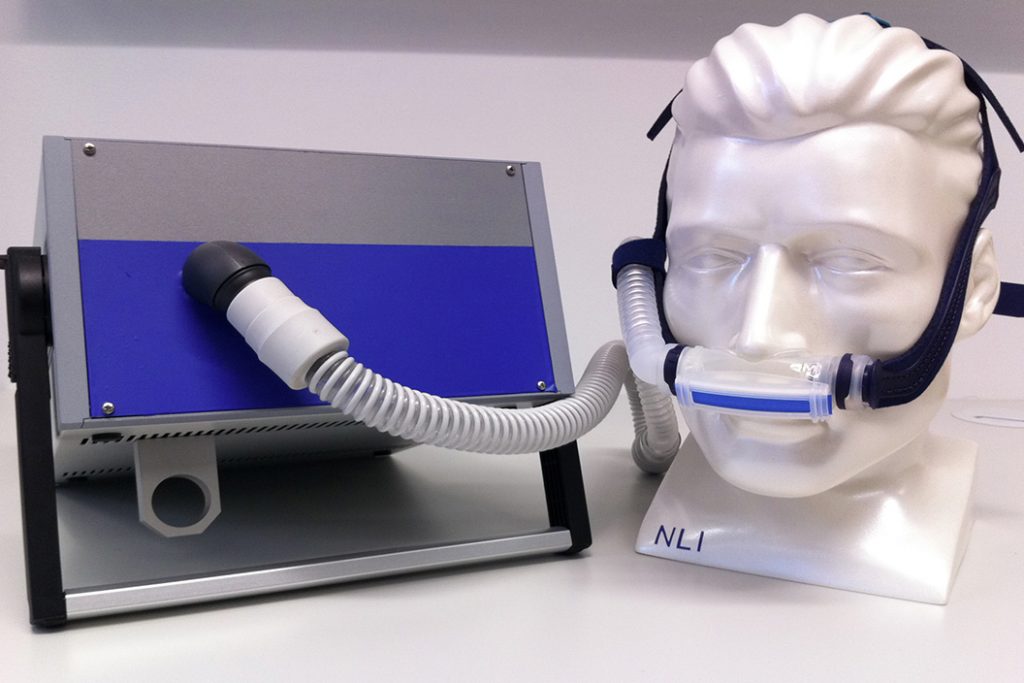
However, another question will be decisive for the success of the therapy: Will the researchers be able to dose the active substance better using the new method or deposit it in the target area of the small airways? The solution to this problem lies in the combination of inhalation with an already established therapy. The new method is primarily intended for patients with severe COPD. These patients are already supplied with oxygen and especially with night-time ventilation (BIPAP = biphasic positive airway pressure).

BIPAP is an already established ventilation therapy that supports patients in breathing. With the help of a machine-generated overpressure, the airways are opened, and the respiratory muscles are relieved. Prof Koehler sums up the special feature of Nasal Long-Term Inhalation: “We combine the congestion pressure method with inhalation therapy. With pressure, the airways are shaved, and then the drug is applied using a nebulizer system. This combination brings us much deeper into the periphery of the lungs than we have achieved so far. With congestion pressure, the way over the nose is ideal.”

Grafik nasale Langzeit-Inhalation

Effectiveness must be evident in patients’ everyday lives

This ambitious research project has now reached a crucial point: Further studies will further demonstrate the effectiveness of nasal long-term inhalation. And it is not only bronchial-enhancing active ingredients that can be administered via nasal inhalation. Cortisone, antibiotics and the moist inhalation of brine can also be applied in this way.

Nasal Long-Term Inhalation therapy, therefore, has great potential for intelligent and automatically controlled medication, which could take patient care to a new and better level. The question of patient adherence to therapy – so-called compliance – is now increasingly coming to the fore: Do patients accept the novel therapy in their daily lives and thus improve compliance? What Prof. Koehler knows ist that “a therapy like NLI can only be successful if patients are convinced that it helps them.”

If this succeeds, Nasal Long-Term Inhalation could soon find its way into patients’ everyday lives – and the idea of healthy sleep could become even more important for those affected.

Also interesting:

> Sleep apnea: how poor sleep causes health risks
> Particle Therapy: Fighting Cancer gently

“We are the ideal financial partner for healthcare start-ups”

Whether it’s a new medical app, diagnostic or wearable, the first step in setting up a medical company is having a great idea. But that’s only one element that will lead to business success. In this interview, Jens Fuerbeth, Head of the Commercial SME Division and member of the Board of Directors of Volksbank Mittelhessen, explains what makes good financial advice for healthcare start-ups and how Volksbank’s team of experts helps entrepreneurs get started.

dva Volksbank Servicezentrum (Credit: Daniel Vieser Architekturfotografie Karlsruhe)

What role does the healthcare sector play for Volksbank Mittelhessen, and for the region itself?

Jens Fuerbeth: We receive about 250 inquiries per year, which result in about 130 grants. More than a quarter of these inquiries come from the healthcare industry. The health care system is, therefore, an essential pillar and a decisive element for us and for the region. In addition, the industry in Middle Hessen is very prosperous thanks to many partners, Middle Hessen initiatives and the organizations for healthcare and start-up support. We see enormous potential for the entire sector and are thus continuing to expand our capacities: In the future, we will increase our healthcare financial team by 50 percent – almost ten employees.

grants
0

We receive a total of about 250 inquiries per year, which result in about 130 grants. More than a quarter of these come from the healthcare industry.

What makes the start-up support for healthcare companies at Volksbank unique?

Jens Fuerbeth: Our trademark is the personal approach. We want to get to know both people and their ideas. So in our first consultation, we are not just concerned with the concept but also with questions such as who is behind the idea? What were their goals? We want to know whether a similar idea already exists or whether the customer wants to build something completely new. We want to be a contact at eye level – personally and professionally.

Our customers appreciate the fact that, as consultants, we bring medical know-how and industry knowledge to the table. We see ourselves as a partner who can assess the needs and challenges in the healthcare sector.

For a long time our offer was unique in the region. These many years of experience is now paying off, because our head start in supporting healthcare start-ups is what sets us apart from other banks. The extremely positive customer feedback we’ve received confirms our value and consulting competence.

Jens Fürbeth (Credit: transQUER GmbH)

What expertise do you offer healthcare start-ups?

Jens Fuerbeth: The promotion of the bank’s existence is naturally part of the core business of a medium-sized bank. However, we go one step further: Our department, medService, is specially tailored to the needs of the healthcare industry and advises doctors, pharmacists, hospital managers as well as new companies and their founders – and we’ve been doing so for 13 years. Our experience and strong networking with regional partners who offer additional support or special expertise is also very helpful for healthcare start-ups.

What special challenges do healthcare startups have to face?

Jens Fuerbeth: Medical products are rightly subject to strict requirements and guidelines. Obtaining the corresponding regulatory approvals usually takes a lot of time. Many founders underestimate these long-term costs that come with the process. It often takes years before your product overcomes the regulatory hurdles, reaches market maturity and generates sales. Thus, the right type of financing is just as important as finding and applying for the right subsidies. Without experience, this process can be very confusing and complicated; we felt the same at the beginning of our efforts. Now we can pass on this knowledge in an optimal way.

What is it about consulting that is particularly compelling for you?

Jens Fuerbeth: It’s great to see how an idea is turned into a finished, marketable product that helps countless people and thus provides a benefit for the general public, such as a medical test being used in the healthcare system. Due to banking secrecy, we are unfortunately not allowed to give concrete examples. What I can say is that, again and again, I am thrilled by the diligence, know-how and stamina with which the young entrepreneurs approach their goals. My greatest motivation is to support these projects.

company profile

Volksbank Mittelhessen

Volksbank Mittelhessen considers itself a competent and reliable partner in the region. The promotion of its more than 200,000 members has been its most important mission for more than 160 years. At its 80 locations, 1,300 employees maintain direct contact with the people of Central Hessen. In accordance with its cooperative values, the bank advises its more than 340,000 customers in a spirit of solidarity, partnership and personal service. Through numerous projects and activities, Volksbank Mittelhessen and its members generate positive results that have an impact on the entire region.

A Financial Injection for Insect Biotechnology

Active ingredients for medicine, sustainable plant protection or industrial biotechnology – all this and much more lies dormant in insects and their cells. In order to support the scientists in their innovative projects, the state of Hessen is providing further funding.

Insect research in Giessen is a success story: This is how Science Minister Angela Dorn put it when she announced that the extensive support for insect biotechnology in Hessen continues: The state is providing an additional 1.5 million euros from LOEWE funds to finance half of the additional costs of the new building for the planned Fraunhofer Institute Bioresources in Giessen. At a ceremony of the Giessen LOEWE Centre for Insect Biotechnology  & Bioresources (ZIB), Minister Dorn also presented the decision on the funding of the ZIB from the LOEWE program for the promotion of cutting-edge research, which was decided in December.

Where insect research is buzzing

“A one-off funding for the establishment of a Fraunhofer project group on bioresources at the University of Giessen in 2009 turned into a LOEWE focus, then the LOEWE center,” said Minister Dorn. “We will now support this excellent work with a further 5.8 million euros until 2022. In total, the state of Hessen has so far approved around 67 million euros from the LOEWE program for Giessen’s Insect Research.” The scientists are researching biotechnological methods to use insects or their cells to develop new active ingredients for medicine (such as in the fight against antibiotic-resistant bacteria or remedies for chronically infected wounds), sustainable plant protection (e.g. environmentally friendly pest control for agriculture) or industrial biotechnology (e.g. the biological preservation of food).

A modern infrastructure including greenhouse

The new four-story building costs about 33 million euros and offers space for laboratories, offices and a foyer. A greenhouse is also being built on the building’s roof. Additional costs have been incurred as a result of generally rising construction costs. “The new building is of central importance for the establishment of the institute and thus for the continued development of the research resources built with LOEWE funds at the Giessen site,” said Dorn. “I am confident that the Fraunhofer Society will bear the other half of these additional costs from federal funds, as before, so that scientists can move into the new building with its state-of-the-art infrastructure as soon as possible.”

In total, the state of Hessen has so far approved around 67 million euros from the LOEWE program for Giessen’s Insect Research
0

Internationally renowned: Insect research from Giessen

Prof. Dr. Joybrato  Mukherjee, President of the  Justus Liebig University (JLU), was also pleased that the handover of this grant decision took place in the new Fraunhofer building, which was built with financial support from the state of Hessen. “With the establishment of the Bioresources Section of the Fraunhofer Institute IME at the Giessen site, combined with the perspective of an independent Fraunhofer facility, LOEWE funding has achieved a visible and sustainable goal,” said Mukherjee. “I am extremely grateful to the state of Hessen for the long-term support of this innovative research area. Not the least because of this support, the Giessen insect biotechnology is also internationally renowned.”

Sustainable solutions to global challenges

Handover Förderbescheid LOEWE-ZIB; credit

Prof. Dr. Andreas Vilcinskas from JLU’s Institute of Insect Biotechnology and the Fraunhofer Project Group Bioresources, which coordinates the LOEWE Center for Insect Biotechnology and Bioresources, outlined the importance of the research area. “Invasive species such as mosquitoes that are importing new pathogens, biological plant protection, the preservation of biodiversity, the production of food for a growing global population: We are looking at all of these global challenges,” said Vilcinskas. “Thanks to the support of the state of Hessen, and with the Fraunhofer Society as a partner, we are well on the way to taking an international leading position in insect biotechnology in Giessen – in research and application.”

A mouse trap for the ‘big eaters’

Researchers at Marburg University have generated a genetically altered mouse line to gain insights into the hidden life of renal macrophages. This crucial step could allow scientists to early detect many kidney diseases.

Credit: Shutterstock

Macrophages, also known as the big eaters, are specialized immune cells that play a central role in many inflammatory processes in the human body. They are found everywhere in tissues and organs. In the kidneys, these cells react very sensitively to tissue damage and adapt very quickly to dynamic changes in their environment. Getting a close look into the genetic changes regulating those adjustments could therefore be very helpful for better understanding the development of kidney diseases. “This is precisely why tissue macrophages are of particular interest in medicine,” says Prof. Dr. Ivica Grgic, the nephrologist from the University of Marburg leading a university research team. Macrophages are hidden in the renal tissue among more than two dozen other cell types. Therefore, it is challenging for researchers to differentiate their specific activity from the activity of other cells. “This makes it so difficult to gather pure and undistorted information about them,” explains Grgic. In order to solve this problem, he and his team have developed the first mouse line that allows both the visualization of macrophages in the kidneys and also the opportunity to record the dynamic changes in their gene activity in almost real time.

The results of their research were published in May 2020 in Scientific Reports, a research journal from the Nature group. Besides Grgic’s team, other scientists from Marburg University, the Universities of Giessen, Wuerzburg and Heidelberg as well as from the United States cooperated in this study. The German Research Foundation, the Von Behring Roentgen Foundation and other donors provided financial support.

MacTRAP mice: getting deep insights into the life of renal macrophages

The research group first developed an artificial macrophage-specific gene construct. Then, they generated a transgenic mouse line, the “MacTRAP” line, which expresses this gene. The synthetic genetic construct codes for both the ribosomal protein L10a and the fluorescent dye eGFP, which enables the identification of the gene product. L10a is a component of ribosomes and plays an important role when gene transcripts, so-called mRNAs, are converted into proteins. These highly informative complexes of ribosomes and mRNAs are also called polysomes. Since only macrophages produce the “eGFP-L10a” fusion protein, the research team was able to “grab” the flagged artificial protein using magnetic microspheres with a special antibody coating. Finally, they extracted the protein together with the respective macrophage-specific polysomes from the cells. This allowed them to avoid contamination and distortion by gene products from other renal cell types.

Prof. Dr. Ivica Grgic

Changes in the genetic profile of macrophages as early indicators for kidney diseases.

Thanks to this new method, the researchers could do a high-resolution profile of renal macrophages and gain better insights into their biological properties, functions and behavior. “As alterations in the gene expression patterns of these immune cells are among the earliest measurable signs offers the chance to intervene in pathological processes at an early stage and in a targeted manner,” explains first author Dr. Andreas Hofmeister, who was significantly involved in the study as part of his doctoral thesis with Prof. Grgic.
“There is a wide range of potential uses for the TRAP approach, not only in the kidney but also in other tissues and organs such as the lung, liver, skin and vascular system. This approach works in many organs and should therefore be universally applicable,” explains Grgic. To date, the novel MacTRAP mouse line is only available at the Philipps University in Marburg and has not yet been commercialized.

Den Ursachen lebensbedrohlichen Lungenhochdrucks auf der Spur

Ein Team von Wissenschaftler aus Mittelhessen sucht nach neue Strategien zur Behandlung des tödlichen und bislang unheilbaren Lungenhochdrucks. Ihre Erfolge wurden durch eine Verlängerung der Förderung seitens der Deutschen Forschungsgemeinschaft (DFG) für weitere vier Jahre honoriert.

(Credit: Yevhen Vitte/ shutterstock)

Das perfekt abgestimmte Zusammenspiel von Herz und Lunge garantiert die optimale Versorgung unseres Körpers mit lebensnotwendigen Sauerstoff. Wenn aber die Lungengefäße durch Wandverdickungen verengt oder blockiert sind, wird der Blutfluss gestört und der Druck in den Lungenarterien steigt. Das Herz muss mehr Arbeit leisten, da die rechte Herzkammer mehr Kraft braucht, um das Blut durch die Lungen zu pumpen. Das Ergebnis ist der sogenannte Lungenhochdruck, eine Überlastung des Herzmuskels, der zunehmend schwächer wird und letztendlich versagt. Auch wenn die Inzidenz des Lungenhochdrucks relativ niedrig ist – in Deutschland sind schätzungsweise 2000 bis 6000 Menschen davon betroffen – ist die Suche nach neuen Therapiestrategien unerlässlich, da die Erkrankung unheilbar ist.
Im Rahmen des DFG-Sonderforschungsbereichs (SFB) 1213 „Pulmonale Hypertonie und Cor pulmonale”, erforschen Wissenschaftlerinnen und Wissenschaftler aus Mittelhessen unter Federführung des Zentrums für Innere Medizin der Medizinischen Klinik II der Justus-Liebig-Universität Gießen (JLU) die krankmachenden Umbauprozesse in Lunge und Herz, die zum Lungenhochdruck führen. Die Erfolge dieses Konsortiums in der letzten Förderperiode, haben zu einer Verlängerung der DFG-Förderung um weitere vier Jahre mit rund 13,84 Millionen Euro geführt. „Ich freue mich sehr darüber, dass die wichtige Arbeit unseres Forschungskonsortiums so honoriert wurde und nun fortgesetzt werden kann“, so Prof. Norbert Weißmann, Sprecher des Sonderforschungsbereichs. „Unser Vierjahres-Etappenziel auf dem Weg, neue Zielstrukturen für die Behandlung des Lungenhochdrucks und des Versagens des rechten Herzens zu finden, haben wir erreicht.“

Lungenhochdruck und Lungenkrebs sind eng vernetzt

Zu den wichtigsten Ergebnissen der Forschungsgruppe zählt der Nachweis einer Verbindung zwischen Lungenhochdruck und Lungenkrebs. In Lungengefäßzellen und Krebszellen führen nämlich ähnliche Mechanismen zu einer ungehemmten Zellvermehrung und zur Ausbildung von Wucherungen. Diese Erkenntnis könnte den Weg ebnen für die Entwicklung neuer Medikamente, die zielgerichtet in der Behandlung von beiden Erkrankungen angewendet werden können. Ein neues Projekt soll sich jetzt mit der genaueren Untersuchung dieser Mechanismen befassen.
Die Wissenschaftlerinnen und Wissenschaftler identifizierten einen molekularen Mechanismus, der die Entwicklung des Lungenhochdrucks aus der Wand der Gefäße heraus steuert und den man von Krebspatienten kennt. Medikamente, die in der Krebstherapie eingesetzt werden, könnten deswegen auch die krankhaften Prozesse bei Lungenhochdruck aufhalten und zu einer Regeneration der verengten Blutgefäße führen.

Neue Therapien können den Funktionsverlust des Herzens aufhalten

Die Untersuchung der Reaktionen des rechten Herzens auf die Überbelastung beim Lungenhochdruck hat zudem zu einem besseren Verständnis der kardialen Anpassungsmechanismen geführt. Neu entdeckte Biomarker erlauben eine genauere Bestimmung des Krankheitsgrades des rechten Herzens. Diese neuen Erkenntnisse haben den Forschern dazu verholfen, Wirkstoffe zu ermitteln, die die Herzmuskulatur stabilisieren und gleichzeitig dem fortschreitenden Funktionsverlust entgegenwirken können. Auch die Rolle der linken Herzkammer soll jetzt näher untersucht werden.

Vom Labor zur erfolgreichen Patientenbehandlung durch gute Kooperation

An diesen Projekten sind außer der JLU, das Max-Planck-Institut für Herz-Lungenforschung und der Campus Kerckhoff der Justus-Liebig-Universität Gießen und ihres Fachbereichs Medizin in Bad Nauheim sowie die Philipps-Universität Marburg beteiligt. Eine enge Kooperation besteht auch mit dem Imperial College London (Großbritannien). Die Beteiligung von mehreren Zentren, die erfolgreiche Kooperation unter den unterschiedlichen Forschungsgruppen und die Bündelung von mehreren Krankenhauskapazitäten sind unerlässlich um neue Therapien zu entwickeln und um diese schnell und effizient in klinischen Studien zu testen. Ein breites Netzwerk erlaubt die enge Verknüpfung zwischen Grundlagenforschung und klinischer Forschung, die notwendig ist, um neue Therapieansätze erfolgreich ans Krankenbett zu bringen. „Entscheidend für unseren Erfolg ist die enge Verzahnung zwischen den verschiedenen Projekten, die unmittelbare Einbindung der klinischen Forschung und die hervorragende Zusammenarbeit der Projektleiter“, so Prof. Weißmann.

Financial specialists for the healthcare industry

Good medicine needs secure financing: Volksbank Mittelhessen combines financial competence and health care industry know-how. The bank’s medService advises customers from the health sector and offers tailor-made financing for business start-ups, investments, equipment and office facilities – for doctors, pharmacies and clinics.

In Middle Hessen, the pulse of the medical sector can be felt everywhere. Numerous clinics – including the University Clinic of Giessen and Marburg – care for patients. Three regional universities train young academics in medicine and health care management, who then spread their knowledge into the region and promote innovation and a start-up culture. Healthcare industry is a healthy, functioning entity here: “In Middle Hessen, the entire healthcare industry is in the direct vicinity of major international corporations, highly-established regional and medium-sized companies or ambitious start-ups,” explains Thomas Falkenrodt, Head of medService at Volksbank Mittelhessen. Falkenrodt advises doctors, pharmacists and hospitals. What unites physicians, pharmacists, biologists and chemists is that they all have a scientific education, but little experience in finance. That is why many of them rely on an Falkenrodt’s division, known as medService.

(Credit: transQUER GmbH)

Partner für die Medizinbranche

MedService was founded by Volksbank Mittelhessen especially for health professionals. Falkenrodt has been managing the division for 13 years. “Our range of products is unique in the region within the cooperative network,” he says. “We attach great importance to personal advice and contact maintenance and provide our employees with the opportunity to expand their skills through ongoing internal and external measures.” The numbers speak for themselves: Every year the medService team looks after up to 1,000 customers. Doctors, dentists, pharmacists, hospital managers and therapists make up the majority of these.

Since its foundation in 2007, the medService team has increasingly focused on the special needs of its customers. “We know the special requirements and know from experience where the most frequent difficulties and pitfalls occur,” says Falkenrodt. One fact in particular distinguishes the work of his team from that of their bank colleagues in other consulting areas, Falkenrodt continues: “The healthcare industry is subject to strict legal regulations. There are complex approval procedures and a correspondingly lengthy time-to-market.” All of these factors must be kept in mind when developing a financing concept.

Every year the medService team looks after up to 1,000 customers. Doctors, dentists, pharmacists, hospital managers or therapists make up the majority.
0

Specialized all-rounders

What began as a one-man show at Volksbank Mittelhessen is now a team of five specialized employees. Thanks to numerous training courses and years of practice, the team understands the healthcare industry and its specifics. Each of them is based in a different Middle Hessen district and is always available locally. And both the team and the range of financial products has grown over the years: from tailor-made financing for medical equipment and practice fittings, through public subsidies to insurance, investments or provisions for the future. The team’s holistic concept also includes solutions for private financial matters.

The medService also offers support outside the core business of a bank, says Falkenrodt: “We accompany business start-ups of medical physicians, organize specialist conferences and physician workshops. In addition, we develop individual financial planning concepts for doctors, pharmacists and their staff teams or give tips on organizing practices.” Even special topics such as hospital financing have become a particular strength of Volksbank Mittelhessen.

In the video, Thomas Falkenrodt, head of medService at Volksbank Mittelhessen, explains the role of economic efficiency in medicine. 

The individual is the focus

But specialist knowledge is not the only hallmark of the medService team To give the best advice, the team has to also see the overall context and the individuals they work with. “As in all areas of consulting, personal contact has the highest priority for us. We want to get to know and understand each customer personally and as well as possible. This is the only way we can identify early on which loan model is suitable or whether the repayment plan is perhaps too ambitious,” says Falkenrodt.

The basis is the so-called Practical Dialogue (PraxisDialog), extensive discussions with the personal consultant. Here, the aim is to develop a strategy to achieve the client’s goals, Falkenrodt adds. “We are trying to take a joint look into the future, that is, the next five to ten years, and clarify: What are your goals and wishes? Is there already a strategy to achieve them or does you want to develop a plan together with us?” The priorities of the customers are very different. While for one person the focus is on developing their practice, another person wants to build up assets, hedge risks or fulfil a special wish. “The client determines what we focus on in the Practical Dialogue. This is the focus of attention,” explains Falkenrodt. In any case, Volksbank’s concept seems to be working, and the customer response speaks for itself: 99 percent satisfaction rate. “We are very proud of this feedback,” says Falkenrodt. “The whole team is full of passion and enjoys their work.”

Holistic advice thanks to a partner network

In addition to the healthcare know-how, the medService team is also extensively networked in the region. “Thanks to our many years of experience, we can answer almost any question – and for the remaining cases, we maintain skilled partnerships,” says Falkenrodt. In addition to the wide-ranging network of specialists, the medService team’s close cooperation with regional organizations and the Healthcare Middle Hessen initiative offers a plus in knowledge and support. This also reflects the strength of the Central Hesse region. “It is not a single player, but the interaction of all those involved in a common system that makes the healthcare industry here a strong and healthy organism with a future,” said Falkenrodt.

company profile

Volksbank Mittelhessen

Volksbank Mittelhessen considers itself a competent and reliable partner in the region. The promotion of its more than 200,000 members has been its most important mission for more than 160 years. At its 80 locations, 1,300 employees maintain direct contact with the people of Central Hessen. In accordance with its cooperative values, the bank advises its more than 340,000 customers in a spirit of solidarity, partnership and personal service. Through numerous projects and activities, Volksbank Mittelhessen and its members generate positive results that have an impact on the entire region.