Healthcare Storys
Durch die sinkende Anzahl an Landarztpraxen haben Menschen, die auf dem Dorf leben, immer weitere Wege zum nächsten Arzt.
As countryside doctors retire and young people increasingly move to cities, doctors are disappearing from rural areas This is also the case in Central Hessen, Germany. Here, the Commercial Director of the Lahn-Dill region Rural Doctor Network outlines new approaches they’re using secure medical professionals for rural areas.
Artikel lesen
Viele ältere Menschen sind auf Pflegedienstleister angewiesen. Bei 1A Care finden sie den für sie passenden Dienst.
More people and families are looking for personal care services and health aids. However, the search process means they lose a lot of valuable time – which they could use instead for persons who need care. A company based in Central Hessen, Germany, wants to change this.
Artikel lesen
Small beetles are more productive than you think: They can heal wounds or provide basic substances for the production of antibiotics. That's why scientists at the Fraunhofer Institute in Giessen, Germany, are researching how these crawling insects can be used in medicine – and how they are already successful.
Artikel lesen
Ventilators are not always life-savers: Although sending oxygen to the lungs is fundamental during operations, the body’s movements during breathing – such as the rise and fall of the chest – can actually interfere with receiving oxygen. A new revolutionary ventilation technology from Central Hessen, Germany, is able to avert
Artikel lesen

Eine CNC-Fräse fertigt orthopädische Einlagen – genau abgestimmt auf die individuellen Bedürfnisse jedes Kunden.
The wrong shoes can cause mispositioned feet. Using new 3D technology, orthopedist Daniel Hartmann produces insoles that provide relief for workers engaged in demanding physical labor. Renowned athletes also rely Central Hessen’s Hartmann for orthopedic high-tech and optimal sports performance.
Artikel lesen
Erhöhter Blutdruck im Lungenkreislauf ist eine der charakteristischen Auswirkungen von Lungenhochdruck.
Patients with pulmonary hypertension live with constant shortness of breath. Currently, this disease is not curable; patient symptoms can only be alleviated. But a team of researchers in Giessen, Germany, examined Fucoidan, a brown algae extract, for pulmonary hypertension treatment, and they have come to promising results.
Artikel lesen

EXCITING STORY? INNOVATIVE SERVICE?

We bring your content to the blog.
Please contact us. 

Follow us…

facebook - Healthcare Mittelhessen   LinkedIn - Healthcare Mittelhessen   LinkedIn - Healthcare Mittelhessen

How we can make the “rural physician” profession attractive again

Durch die sinkende Anzahl an Landarztpraxen haben Menschen, die auf dem Dorf leben, immer weitere Wege zum nächsten Arzt.

Germany’s lack of rural doctors also affects us here in Hessen’s mid-central region. The Lahn-Dill rural physician network breaks new ground to ensure medical care by general practitioners in the district. The network’s commercial head, Lars Bongartz, reports on the challenges in setting up the network and the necessary building blocks for referring patients to doctors and practices.

Lars Bongartz
Commercial head of the Landarztnetz Lahn-Dill GmbH

Being a rural physician used to be almost a romantic, worthwhile goal for many doctors; today, however, it no longer attracts many medical graduates. Instead, young people are drawn to urban areas and large cities. We must find a solution to this problem.

Our experience shows that once young doctors experience first-hand what it’s like to be a rural physician, most of them stay in these communities. We want to make such initial contact with the profession of rural medicine possible – “we” are the Rural Physician Network (in German, “Landarztnetz,” or LAN). Our goal is to help protect general practioner patient care in rural Lahn-Dill areas. In the past five years, we’ve built a network that enables us to find successors for rural practices in our district -since many doctors in rural regions have no luck in finding a successor on their own.

Demographic change is everywhere

Demographic data told us years ago that medical care in rural areas would become scarce. That’s why we founded our initiative. So we asked ourselves: What needs to happen?

For some time now, there has been an increasing trend for physicians to take on salaried positions instead of running their own practice on a freelance basis. In the past, roughly 20 to 30 years ago, the salaries of freelance physicians were much better than in hospitals. Today, salaries in the inpatient sector are just as good. In addition, physicians in hospitals and clinics are more flexible and can change their place of work more easily if they wish. That’s why many doctors today prefer to work as salaried employees. Today, most medical school graduates have salaried positions in healthcare facilities.

In the private-practice sector, this possibility has only existed since 2004, when legal requirements for medical care centers were established. Since then, more doctors have been choosing this path. With the rural physician network, we have created a possibility for doctors to be employed with us in a rural medical practice.

Durch die sinkende Anzahl an Landarztpraxen haben Menschen, die auf dem Dorf leben, immer weitere Wege zum nächsten Arzt.
Due to the decreasing number of rural medical practices, people living in villages like this one have to travel further to see a doctor.

Advantages for senior physicians

Traditionally, rural physicians sell their practices. Today, this opportunity arises less often because they can’t find a successor. This means many doctors have to close or give away their practices, which most doctors don’t want to do. Several reasons exist for this. Since most doctors also live in the area where they practice, they assume that their patients will continue to ask them for medical advice although they no longer have a practice. Another reason why physicians don’t like to close their practices is that they want to preserve their life’s work. With a suitable successor, they could satisfy both wishes.   

And this is where we come in. We integrate private practices in the rural physician network. The network assumes the tangible assets of the practice, including the leasing contracts and employees. However, this is only on the condition that the physician continues to practice for 12 months. We need this time to find a potential successor, and the senior doctor has time to familiarize the new rural physician with his or her work and patients.

From the annual report of the medical statistics of the German Medical Association of 31.12.2018

In 2018, 392,400 doctors were practicing in Germany. Of these, 117,500 identified themselves as independent in private practice, while 39,800 identified themselves as staff doctors within medical systems. A quarter of the total practicing doctors plan to retire within the next 5 years. Their retirement will also affect numerous rural practices. According to projections by the German Council of Economic Experts (“Sachverständigenrat zur Begutachtung der Entwicklung im Gesundheitswesen”), there will be a shortage of 30,000 general practitioners across Germany in the next 10 to 15 years.

Opening professional doors for young doctors

When young doctors join us and are hired by a practice, they have three possibilities: If they realize that being a rural doctor is not for them, they are free to move on. If they like the profession, they can either remain employed indefinitely by the practice, or they can take over the practice and start it again as an independent private practice outside of the network. So we offer employee status with the option of private practice.

And these are not the only advantages for young doctors. In addition, the network offers them various employment models – they can work full-time or part-time and have a company car. From my own experience, I can say that once young doctors have settled in, they usually don’t find the rural physician existence all that bad – and they stay. In this sense, we are an important regional political project as well. The network improves medical care in rural areas by keeping practices open and by creating jobs. We currently employ 50 people at our sites – ten doctors and 40 medical assistants in different practices.

Viele Ärzte haben sich schnell an das Dasein als Landarzt gewöhnt und schätzen es sehr.
Many young doctors get used to working in the countryside very quickly and enjoy this environment.

The rural physician network offers opportunities for the future

Unfortunately, the rural physician network owes its existence to several coincidences. In the future, it will not be able to exist the way it does now. We must take the next step to develop it further. One possibility would be to allow non-physicians – such as the medical assistants in the practice – to work as substitutes and not merely in delegation as is common until now. Plans have been made in this direction, but this is not yet legally possible. Another possibility is having a better regional management. This means there has to be patient transport systems that can take patients to physicians who are farther away.

The third possibility is further development of telemedicine. Until now, there have only been tests – for example, a digital consultation via video chat. But I think that will change sooner or later. People in rural areas will have to accept that their medical care will change in the future and that they will have to travel longer distances. They will also have to get used to digitalization in medicine – which is not negative in itself, but still unfamiliar to most people.

This change is coming, and it must come. However, through the rural physician network, we have created an opportunity to make the change as smooth as possible – and above all, to help shape it.

company profile

Landarztnetz Lahn-Dill

The partners of the rural physician network are Lahn-Dill-Kliniken GmbH and former first vice president of the physician network Lahn-Dill (A.N.R. e.V.), Dr. Michael Saar, from Breitscheid. The Lahn-Dill rural physician network – and its base at the medical care center in Breitscheid – were approved on April 1, 2014, by the admission committee of the Association of Statutory Health Insurance Physicians, Hessen.

1A Care: The digital care service

Viele ältere Menschen sind auf Pflegedienstleister angewiesen. Bei 1A Care finden sie den für sie passenden Dienst.

Industrial nations are aging – and more people need nursing services and resources. But whether it’s a lift, walker or nursing bed, quality and service are decisive factors before a purchase. 1ACare – a start-up from Giessen – was founded to ensure just that. By providing an intelligent marketplace solution, this young company helps arrange the placement of care aids and services efficiently and transparently.

Viele ältere Menschen sind auf Pflegedienstleister angewiesen. Bei 1A Care finden sie den für sie passenden Dienst.
Many elderly people are dependent on care providers. At 1A Care they can find the right service for them. (Credits: Halfpoint / shutterstock.com)

The elderly are the majority – worldwide: for the first time in history, there are more people over the age of 65 than under the age of five. According to an analysis by Torsten Sløk of Deutsche Bank, this ratio will become two-to-one over the next two decades. As people get older, the need for long-term care increases. But the search for optimal care and necessary living aids often proves difficult and time-consuming. Prof. Dr. Martin Przewloka, Professor for Technologies and Modern Business Informatics at the TH Mittelhessen University of Applied Sciences (THM), recognized this problem. In order to solve it, he founded the start-up 1ACare.

Care with heart

1ACare has developed a distribution platform that connects medical supply stores and their customers digitally. “Even if society is aging, the internet is the most frequented method for searching new products,” says Holger Kloetzner, COO at 1ACare. The 1ACare marketplace offers all sorts of products related to care. There, 1ACare places doctors’ prescriptions with the medical supply stores. In addition, customers are able to order products from the respective medical supply stores via 1ACare. The system benefits customers and suppliers alike. “Medical supply stores can offer their supply options on our portal and receive access to an online sales channel and – above all – visibility. Large and small providers are displayed quickly, transparently and neutrally to customers, who can form their own opinions,” says Kloetzner.

1A Care bietet ein neutrales und transparentes Portal für Pflegehilfsmittel und Pflegedienstleistungen.
1A Care provides a transparent and neutral website for care services and goods.

Nursing providers also have the possibility to offer their services. Outpatient or inpatient nursing services can be quickly and transparently identified by entering the postcode. Information like contact data, ratings and the capacities of the service providers are also made accessible. This option enables senior citizens to find a provider with services tailored to their needs and helps care providers to establish direct contact with the customer via the digital route. A particularly useful feature for nursing services is the ability to indicate their capacity. “Many care services do not lack customers. On the contrary, the problem is that they have more requests than they can handle. Our portal offers a transparent presentation, so it increases efficiency for searchers and providers,” says Kloetzner.

"Their relatives would rather invest the time they spend looking for care products and services doing what is really important - caring for their relatives. We help them to do that."
Holger Kloetzner
COO at 1ACare

Everyday aids of the future

Although the care portal already offers a wide range of services, 1ACare plans to expand on it. In the future, providers of home-delivered food  – a service known as “meals on wheels” – will be offered. More services are also planned, ranging from physical therapists, speech therapists, art therapists and even handymen will be included into the service.

Company profile

1ACare GmbH - Das Pflegeportal

1ACare GmbH is a digital provider of care services and aids. The company was founded in October 2017 and increases the reach and market access of medical supply stores, industrial partners in the auxiliary materials sector, service providers and care facilities.

Tiny Health Helpers: How insects help develop new medicines

Ladybirds as treasure troves for antibiotics or maggots as biosurgeons and wound healers: Insects possess extraordinary abilities. For this reason, scientists at the new Fraunhofer Institute for Bioresources in Giessen are investigating what contribution insects can make to the future of medicine. These experts in insect biotechnology have already demonstrated their first successes.

Ladybirds are just one of many insects with incredible abilities - from which researchers can learn a lot.

Learning from insects means learning to win: This is the thesis of Prof. Dr. Andreas Vilcinskas, when he explains his research to humans – and goes into more detail about his animals in the laboratory. This zoologist talks about beetles, moths and mosquitoes and their larvae – and how these might soon provide important source for medicine development. Listening to the future director of the Fraunhofer Institute for Bioresources in Giessen, one recognizes the hidden talents in six-legged animals. “Insects are the most successful life form on our planet. There are over a million species,” says Vilcinskas. But even at the molecular level, insects are extremely diverse, resembling a treasure chest filled with active ingredients: “This will also benefit medicine in the future,” says the researcher.

Prof. Dr. Andreas Vilcinskas Leiter des Fraunhofer-Instituts für Bioressourcen
Prof. Dr. Andreas Vilcinskas
Director of the Fraunhofer Institute for Bioresources

Healing wounds without a scalpel

Vilcinskas has been passionate about butterflies since his childhood and is a passionate entomologist – in other words, an insect expert. And Vilcinskas also coined the term “insect biotechnology” or “Yellow Biotechnology” – derived from the insect’s yellow-colored blood, the hemolymph. 

The aim of his research is to develop and apply biotechnological methods to convert insects or individual molecules of insects, cells, organs or microorganisms into specific products or services. Vilcinskas already has a large number of concrete examples: “It is well-known that inflamed tissue heals up to 18 times faster with the help of so-called wound maggots.” The animals release a secretion with which they dissolve dead tissue, including bacteria. This is a highly complex mixture of 47 antimicrobial substances. “These include active substances that have been developed for use in wound dressings, ointments and plasters,” says the zoologist.

Biotechnological production of insect active ingredients

Another example is the Asian ladybird. In Germany, for example, this tiny beetle was used to control aphids and has since increased so rapidly that it has displaced the native species. Vilcinskas and his team concluded that the invasive beetle has a particularly powerful immune system since it has to cope with unknown germs. The researchers also identified a key substance: harmonin. This molecule showed an effect against tuberculosis, schistosomiasis and malaria pathogens. Harmonin also serves as a chemical framework for researchers to develop new drugs, including antibiotics against multi-resistant bacteria. Together with experts from pharmaceutical company Sanofi, the researchers are now trying to make this insect active ingredient fit for usage. However, says Vilcinskas, “just finding the active ingredients is not enough. We always have to think about production on a larger scale.” For this reason, Vilcinskas is cooperating with Professor and Doctor of Engineering Peter Czermak, from the Institute of Bioprocess Engineering and Pharmaceutical Technology at the Technical University of Central Hessen. “For example, our colleagues are genetically reprogramming insect cells so that they can be cultivated in a bioreactor and produce the desired drug molecules,” explains Vilcinskas. The insects’ active substances could soon be used as starting materials for the pharmaceutical industry.

Detecting useful enzymes and microorganisms

The insects are not the only treasure trove of potential medicines. Even microorganisms from the intestines of beetles and maggots are powerful ingredients in their own right or can be used as the starting point for new medicines: The ‘carrion beetle’ is one such case. This animal can use its antennae to detect the smell of carrion over a distance of several kilometers. If, for example, this beetle finds a dead mouse, it conserves it with a special secretion because it later feeds its larvae with the carcass. “We found a number of preservatives in its saliva that might also be of interest for the food industry,” said Vilcinskas. “The carrion beetle thus protects the mouse carcass from decay. At the same time, this insect harbors special bacteria and fungi in the gastrointestinal tract that help preserve the mice.” As soon as the beetle has laid its eggs, it releases another secretion that liquefies the dead mouse – thus making this ‘food’ available for the beetle’s offspring. The researchers also hope to identify these enzymes and active substances in order to develop them for industrial applications.

In the laboratory, bacteria are cultivated in Petri dishes.

Central Hessen – Stronghold for Insect Research

When the entomologist talks about his research projects, it becomes clear that he will not run out of ideas anytime soon. “I am a person of conviction,” says the zoologist. With his commitment, he has made Central Hessen a unique worldwide hotspot for insect research in recent years.

Thanks to Hessian research funding, a flagship project was created at the Justus Liebig University in Giessen: the LOEWE Center for Insect Biotechnology & Bioresources (ZIB), a global pioneer in this field. The insect biotechnologists in Central Hessen combine expertise and successful research. Over the past six years, the scientists have received 36 million euros in research grants from the Hessian Ministry of Science and Art (HMWK) and raised an additional 14 million euros.

The “Yellow Biotechnology” research area is also the linchpin of the new Fraunhofer Institute for Bioresources, which is currently being established in Giessen and headed by Vilcinskas. In close cooperation with the ZIB, the institute will further develop the innovative and economic potential of insect biology. This is a link between academic research, technical universities, product developers and industry. The original ten Fraunhofer employees in 2010 have now grown to more than 100 who are investigating the talents of beetles, bees and other insects in all their facets. Hessen and the German federal government have invested 30 million euros in building the new Fraunhofer Institute, which is currently under construction and is due to be occupied this fall (2019). For the scientists and the location of Central Hessen, one could say that they are learning how to win together – with the help of insects.

company profile

Fraunhofer institute

Zoology Prof. Dr. Andreas Vilcinskas established the Fraunhofer project group “Bio-Resources” in Giessen in 2009. It is the first operational unit in Germany and Europe to focus its research on insect biotechnology and open up new areas of application. With the project “Insect biotechnology,” funded by the Hessian Excellence Initiative LOEWE, the group is pursuing the identification and development of enzymes and antimicrobial peptides with application potential in industrial biotechnology, medicine and plant protection as its overriding goals.

Jet Ventilation: New Technology for Newborns – When Breathing becomes Life-Threatening

Ventilators are not always lifesaving. During surgery, when a patient receives oxygen, breathing movements can increase the risk of accidental damage to delicate blood vessels. Today, medical technology experts from ACUTRONIC Medical Systems Germany have revolutionized ventilator options. With jet ventilation, the patient’s body is completely at rest because thoracic respiratory excursion is shut down, eliminating the risk of injury during surgery.

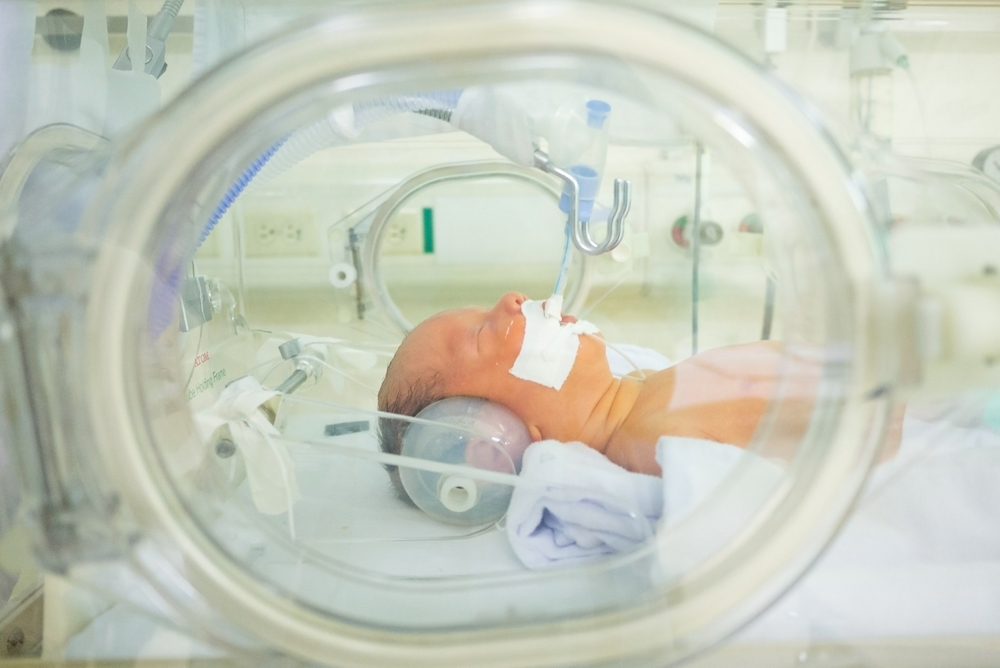
Conventional ventilation methods can involve great risks when operating on newborns. Jet ventilation minimizes those risks. (Credits: Bibiz1 / shutterstock.com)

It is a parent’s nightmare: Their baby is born with a respiratory failure. This type of birth defect remains one of the most common and serious complications for newborns. To save such a newborn, a race against time begins, and every minute counts. The doctor’s every step has to be perfect.

Among newborns, respiratory tract defects remain unfortunately common, and they can require risky surgery. “Such procedures on infants are very dangerous since their airways are short and narrow. Their movements while breathing can make precise surgical procedures difficult,” explains Fatih Yüksel, Managing Director at ACUTRONIC Medical Systems Germany. The company, the global market leader, provides customers with ventilators using membrane, jet ventilation, and heart rate technology.

Fatih Yüksel Geschäftsführer von ACUTRONIC Medical Systems Deutschland GmbH
Fatih Yüksel
Managing Director of ACUTRONIC Medical Systems Deutschland GmbH

In order to decrease the risk to infants during surgery, ACUTRONIC has been conducting research in cooperation with ThoraTech GmbH and the TH Mittelhessen University of Applied Science, in Giessen, Germany (also known as the THM). Collectively, they are developing ventilation technologies that require a minimal amount of air force, in order to provide even the smallest of patients, like newborns, with oxygen. This all-but still flow of oxygen enables surgeons to work with increased precision and to decrease the risk of injuries from surgical instruments.

Gentle ventilation for newborns

During intubation, whether adult or infant, a patient’s head is overextended to form a straight line between mouth, throat and the respiratory tracts. A machine then proceeds to pump oxygen into the lungs. During endobronchial intubation, via the mouth, the doctor inserts the tube precisely into a lung. But typically the tube’s diameter measures between three and six millimeters, which is a size that interferes with surgery on infants. Jet ventilation is different. ”The tube measures only about two millimeters in diameter, which is barely perceptible“ explains Yüksel. This means that the infant patient can keep his/her nose and mouth open during surgery. ”Due to the circulation, we don’t have to build pressure in the lungs,“ explains Yüksel. And jet ventilation offers another advantage: ”Due to the patient’s lack of body movement, the method allows for more precise measurements,“ he adds.

"We're well on our way. The formation of networks in the medical sector – the bringing together of science, research and business, which ultimately turns ideas into products and markets them – still needs to be accelerated and supported.”
Dr. Andreas Weißflog Geschäftsführer Thora Tech GmbH
Dr. Andreas Weißflog
Managing Director – Thora Tech GmbH

Thora Tech: THM’s innovation partner

Thora Tech GmbH plans, designs and produces innovative medical devices and medical assemblies at the medical technology user center of the TH Mittelhessen University of Applied Science in Giessen. In addition to developing its own products and software solutions for medical applications, the company offers service and support for technical and regulatory requirements for new medical devices.

Flow instead of pressure: Jet ventilation protects the lungs

Jet ventilation is based on the Venturi effect: Within a tube, the velocity of flow is greatest where the tube’s cross-section is smallest. Jet ventilation, however, applies this principle to circulation. A machine pumps the compressed volume from the ventilator and fills the lungs with oxygen. Based on an infant’s vital signs during surgery, the neonatologist controls the artificial breaths. Their number may vary from 3 to 500 per minute; in comparison, an adult needs 150 breaths per minute. Since the airways remain unobstructed, the patient is able to keep his/her nose and mouth open. Ventilation sets in, and oxygen diffuses into the alveoli – the alveoles of the bronchi – while carbon dioxide is flushed out with every burst of air.

Since jet ventilation does not built pressure in the lungs, it is optimal for the fragile respiratory tracts of infants. In order to protect the lungs, the dosage of oxygen is adjusted to the patient’s lung volume. “Infants require the dispensation of smaller volumes. This is only possible through a special membrane technology,” says Yüksel. This technology consists of a membrane oscillating at a very high frequency in an air cell with low ventilation pressure, similar to a loudspeaker membrane. The volume is passed to the outside in a spiraling motion and spreads evenly along the entire respiratory tract.

“Would I use the device on my child without concern? It’s only when we can answer this question with a clear yes that we will bring a product onto the market.”
Dr. Andreas Weißflog
Managing Director – Thora Tech GmbH

Innovation of medical technology in the field of neonatology

This and other medical technological innovations have been developed in a network in Central Hessen. Since 2017, ACUTRONIC has been cooperating with the THM and the ThoraTech GmbH, a company from Giessen, Germany, that is responsible for the entire lifecycle of medical devices, including the general supply chain. The team consists of engineers, technicians and physicians and represents innovation in medical technology. Together, the duo of ACUTRONIC and ThoraTech has specialized on neonatology, high frequency and jet ventilation. The experts know each other well. ”Since our university studies, we’ve been unified by the wish to develop lifesaving technologies,“ relates Yüksel. But achieving clinical results with technologies like this can take decades. Testing on living persons is prohibited, and animal testing poses ethical and moral questions, making research difficult. The only way to test is through clinical data. Still, the successes and emotions from newborn wards motivate Fatih Yüksel’s team to continue their work. ”The research on new ventilation technologies for premature babies is a highly sensitive and emotional topic,” says Yüksel. And this topic affects parents and researchers alike. ”The only way to develop more effective devices and to help the people of tomorrow is to continue our research and meeting the regulatory requirements.“ For this managing director, progress in the technology and industry of neonatology is a matter of the heart: after all, newborns are not responsible for their health problems.

Company Profile

ACUTRONIC Medical Systems AG

ACUTRONIC Medical Systems AG produces and distributes ventilation and monitoring solutions for intensive care units. It is the leading manufacturer of ventilation technology in the fields of neonatology, pediatrics and jet ventilation.

3D Medical Technology: orthopedic insoles for competitive athletics and workplace safety

Eine CNC-Fräse fertigt orthopädische Einlagen – genau abgestimmt auf die individuellen Bedürfnisse jedes Kunden.

Ill-fitting, inappropriate shoes can cause feet misalignment. This is why, for example, full-time industrial workers – who wear heavy safety shoes – need optimal orthopedic insoles. Using state-of-the-art 3D technology, Daniel Hartmann produces this medical aid. Professional athletes also rely on this high-tech orthopedic quality created in Central Hessen.

Eine CNC-Fräse fertigt orthopädische Einlagen – genau abgestimmt auf die individuellen Bedürfnisse jedes Kunden.
A fully automatic CNC milling machine produces orthopedic insoles – precisely tailored to the individual needs of each customer.

Gesa Felicitas Krause’s feet are under constant stress: running, jumping over hurdles, leaping over ditches, landing, rolling and then starting all over again – hundreds of times. This European 5K track and field champion trains hard, and her feet are assets. This is why they need optimal support, to prevent long-term damage and misalignment. Only then can this extraordinary athlete perform at her best, as she did at the 2018 European Athletic Championships in Berlin.

Tailor-made orthopaedic insoles

Therefore, athletes like Krause prefer orthopedic insoles that are optimally adapted to their feet and athletic activities. Krause relies on an orthopedic specialist company in Central Hessen: the Hartmann company, located in Dillenburg. This company specializes in intense exercise and biodynamic processes, and its owner knows exactly what high-performance athletes need. “While standard exercise shoes should remain elastic and cushioned for normal training, spiked competition shoes must have additional insoles for jumping,” explains Daniel Hartmann, managing director and master orthopedic shoemaker at Hartmann.

But in addition to orthopedic insoles for athletic shoes, Hartmann also produces insoles for safety shoes. These insoles range from very soft to strongly firm. Hartmann optimizes the insoles so they are adapted to the individual movement sequence. This is particularly important: According to podiatrists, orthopedic misalignments can cause severe pain when walking. Particularly for those workers who often have to wear safety shoes for longer than eight hours, for example, walking can be very stressful. But with an optimally manufactured insole, an even load is placed on each foot. This correct alignment prevents potential damage that results from misalignments such as hip problems. And in patients with arthritis, for example, Hartmann therefore prefers to add more padding so these patients can walk with comfort and pain-free.

But in addition to orthopedic insoles for athletic shoes, Hartmann also produces insoles for safety shoes. These insoles range from very soft to strongly firm. Hartmann optimizes the insoles so they are adapted to the individual movement sequence. This is particularly important: According to podiatrists, orthopedic misalignments can cause severe pain when walking. Particularly for those workers who often have to wear safety shoes for longer than eight hours, for example, walking can be very stressful. 

Daniel Hartmann Orthopädieschuhmacher bei Matthias Hartmann Orthopädie + Sport GmbH
Daniel Hartmann
Master orthopedic shoemaker at Hartmann

But with an optimally manufactured insole, an even load is placed on each foot. This correct alignment prevents potential damage that results from misalignments such as hip problems. And in patients with arthritis, for example, Hartmann therefore prefers to add more padding so these patients can walk with comfort and pain-free.

Diagnostics with modern 3D technology

To make the right insole for each foot, Hartmann measures his customers’ feet using different methods, such as the 3D footprint: An electronic sole sensor measures the forces acting directly on the foot during the stepping movement. The computer evaluates the pressure data and rolling line of the foot with 3D images. This information provides a precise overview of the pressure distribution over the entire sole of the foot. “For example, a one-sided peak load can be distributed evenly with softly lined custom insoles,” explains Hartmann.

And with a 3D foot scan, Hartmann takes pictures of the stressed sole of the foot. “This allows us to analyze the load surface of the foot and the skin texture. This allows us to determine where the orthopedic insoles need to have a corrective effect,” explains Hartmann. He then stores the data in order to later check the treatment’s success.

Modern orthopaedic technology at a glance

An electronic sole sensor measures forces that act directly on the foot during walking. The computer evaluates the pressure data and rolling line of the foot with 3D images. The result: a precise overview of the pressure distribution over the entire sole of the foot.

A 3D scan analyzes the load surface of the foot and the condition of the skin. The load area provides information about where orthopedic insoles need to have a corrective effect on the foot.

The digital system takes just five minutes to accurately measure the circumference and length of the legs for optimal support with perfectly fitting compression stockings. Due to the accuracy of these measurements, the intelligent data configurator of the software suggests the perfectly suitable orthopedic insoles.

Motion analysis evaluates how the foot behaves in the push-off, stationary and landing phases: The foot may bend inwards (pronation) or roll too much outwards (supination).

All measurement and analysis data flow into a CAD system, with which Hartmann’s technicians then create individual custom inserts and produce them on a fully automatic CNC milling machine – precisely tailored to the respective customer. And with this close focus on customer needs, Hartmann has already been able to save the careers of top athletes: He helped a well-known track and field athlete who suffered from extreme muscle problems in her lower leg. “Her pain was so severe that she could not train and was about to quit competitive sports. After we measured her legs and feet and made optimal orthopedic insoles, she was training again for competitions without pain,” says Hartmann.

With its orthopedic manufacturing expertise, Hartmann helps athletics to achieve top performance, ensures safety in dangerous working environments and relieves the orthopedic strain on patients. This makes the Hartmann company a prime example of the orthopedic manufacturing talent in the region of Central Hessen.

Company profile

Matthias Hartmann Orthopädie + Sport GmbH

The company Matthias Hartmann Orthopädie und Sport GmbH in Dillenburg focuses on healthy movement and biodynamic processes. The company, managed in its second generation by Daniel Hartmann, has existed for 28 years and currently employs more than 40 people.

Natural therapy approach for pulmonary hypertension – A breathing aid from the sea

Erhöhter Blutdruck im Lungenkreislauf ist eine der charakteristischen Auswirkungen von Lungenhochdruck.

Since pulmonary hypertension is incurable, people who are affected suffer from a constant shortness of breath. To aid these patients, a team of researchers at the German Center for Lung Research in Giessen, Germany, have investigated the brown algae extract Fucoidan to treat pulmonary hypertension — and found promising results.

Erhöhter Blutdruck im Lungenkreislauf ist eine der charakteristischen Auswirkungen von Lungenhochdruck.
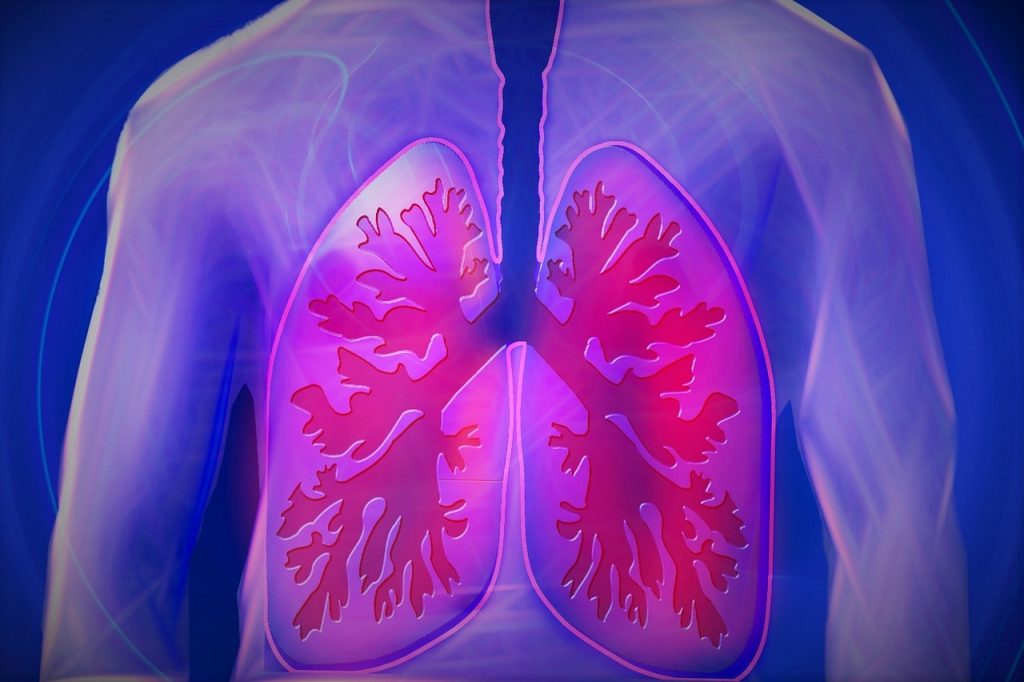
Abnormally high blood pressure in pulmonary circulation is one of the characteristic effects of pulmonary hypertension. (Credits: bykst / pixabay.com)

When climbers reach a high peak, they struggle for air: This is because the oxygen level decreases. For patients with pulmonary hypertension, everyday life is a struggle for air – even slight effort pushes them to their limits. A few stair steps or short walks can feel like high-performance sports. “Pulmonary hypertension is characterized by abnormally high blood pressure in pulmonary circulation. This leads to shortness of breath and reduced physical performance,” explains Dr. Ralph Schermuly, a Professor at the German Center for Lung Research at the Justus Liebig University in Giessen. As a result, says Schermuly, the heart must constantly and increasingly pump against resistance from the blood vessels constricted by the disease in order to circulate air. In the long term, the consequences are myocardial insufficiency and, ultimately, death. “The organ simply no longer manages to build up enough pressure – even though lung function is normal, and there is no increased blood pressure,” he explains.

Pulmonary hypertension – difficult to diagnose

It can take about two years to diagnose pulmonary hypertension because the symptoms are unspecific. Another difficulty in diagnosis is measuring pulmonary circulation pressure, which is responsible for the exchange of blood between heart and lungs. Doctors can only obtain reliable values through a catheter examination by inserting a thin tube through the cervical vein and the heart into the pulmonary artery and measuring the blood pressure directly there. In healthy people at rest, this value is around 15 mmHg (millimeters of mercury column). In pulmonary hypertension patients, the values are about four to six times higher.

Overall, there are five different forms of pulmonary hypertension. “If you take them all together, this disease ultimately affects 200 to 300 million people worldwide,” says Schermuly. Even though the average age at diagnosis is around age 50, people of all ages can still develop the disease. And pulmonary hypertension remains incurable. Medication can only try to alleviate the symptoms and slow down the disease’s course.

The lungs – an efficient manager of gas

About 300 million alveoli, which provide a surface area of 100 to 140 square meters, channel oxygen (O2) into our body. This is about half a liter per minute of these vital gas molecules. The lungs are not consistently evenly ventilated: Small mucus plugs, for example, occupy areas into which hardly any oxygen can enter while breathing. If the blood were to flow through this part, the red blood cells would not be able to absorb any O2 molecules – this would result in a lack of oxygen. This is why the lungs have developed into an intelligent mechanism. They allow the blood to flow only where the pulmonary alveoli can also fill up with air, i.e. where O2 is available. The respiratory organ can measure this mechanism efficiently, down to the second.

How Fucoidan works in the cell

Schermuly and his team are using Fucoidan brown algae extract for a new therapeutic approach. In Asia, this material has been used as a natural remedy for centuries because it can prevent inflammation and cancer, and it can protect blood vessels. “We are dealing with what is known as hypoxic pulmonary hypertension, a form that affects people who temporarily live at altitudes of around 3,000 meters or more,” he explains. In the Giessen laboratory, the researchers investigated cells from human lung tissue and analyzed which signaling pathways are activated after the addition of algae extract. The Giessen experts also focused on cell proliferation. “We found that Fucoidan suppresses cell division, which is good news for the course of the disease,” said Schermuly. The cells in the vessels of pulmonary hypertension patients multiply much faster and are also more resistant to natural cell death. For this reason, experts speak of a pseudo-malignant character since the disease behaves similarly to cancer; however, these cells do not mutate, and no metastases are formed. But since accelerated cell division makes the lung’s vascular walls thicker, the flow of oxygen-rich blood through the cells is reduced. Thus, over time, the aforementioned symptoms intensify.

Prof. Dr. Ralph Schermuly vom Deutschen Zentrum für Lungenforschung am Fachbereich Medizin der Justus-Liebig-Universität Gießen
Prof. Dr. Ralph Schermuly
German Center for Lung Research at the Department of Medicine of the Justus-Liebig-University of Gießen, Germany

Algae extracts help pulmonary vessels

After promising cell experiments, Schermuly and his team investigated the effect of Fucoidan on animals. “For several weeks, we kept mice under conditions corresponding to life at an altitude of approximately 3,500 meters,” he says. As expected, the animals suffered from pulmonary hypertension, which then improved with the absorption of Fucoidan. “We were able to show that the pulmonary vessels remained thinner and healthier and that the heart pumped better,” he explains.

As is often the case with natural substances, several mechanisms play a role in alleviating symptoms. One of these mechanisms is related to inflammatory processes in which the protein p-Selectin is involved: During the immune reaction, it ensures that inflammatory cells remain attached to the vessel wall. The Giessen researchers also found that the p-selectin level is significantly higher in laboratory animals as well as in pulmonary hypertension patients. “We assume that this also stimulates undesired cell division in the diseased vessels,” says Schermuly. “Further experiments with active substances that also inhibit p-Selectin confirmed that we were on the right path.”

The German Center for Lung Research

Lung diseases are among the most common causes of death worldwide. The World Health Organization (WHO) ranks four lung diseases among the ten most frequent causes of death – one in five deaths is caused by a lung disease or its consequences. Therefore, the German Center for Lung Research (DZL e.V.) was founded in 2011. Here, new approaches for the prevention, diagnosis and therapy of widespread lung diseases are being developed via international cooperations. The focus is on asthma and allergies, cystic fibrosis, pneumonia and acute lung failure, pulmonary hypertension and lung cancer. There are three research locations in Central Hessen: Giessen, Marburg and Bad Nauheim.

Treating patients with pulmonary hypertension

Schermuly’s successful investigations have already led doctors at the University Hospital in Giessen to start patient studies with brown algae extract. They are investigating the long-term effects of Fucoidan in the hope of offering a new therapeutic approach to people suffering from pulmonary hypertension. Schermuly and his team are now investigating the effect of algae extracts on other forms of pulmonary hypertension – and he has further ideas for therapeutic approaches from nature. “We have always had traditional Asian remedies on the radar. In addition, through our altitude studies, which we also conduct in cooperation with the University of Lhasa in Tibet, for example, we encounter people who report on beneficial natural products,” says the biologist. Rose root extracts and caterpillar fungi are already in his laboratory to study their lung-protecting effects.

Almost all around the world, a left-sided heart disease is the main reason for a pulmonary hypertension. (Source: The Lance)

Another approach “made in Giessen”

Together with other researchers, Prof. Dr. Schermuly has found another very promising treatment for pulmonary hypertension. So-called cyclin-dependent kinases (CDKs) can be found in the lung tissue of pulmonary hypertension patients and in isolated cells in high concentrations, which are otherwise only known in breast cancer patients.
The scientists used CDK inhibitors known from cancer therapy to see if these would inhibit the effect of CDKs. Their hypothesis was more than confirmed: Not only did the course of the disease stop, but morbidly constricted blood vessels also regenerated. The researchers now hope to use this approach in order to relieve patients’ suffering.